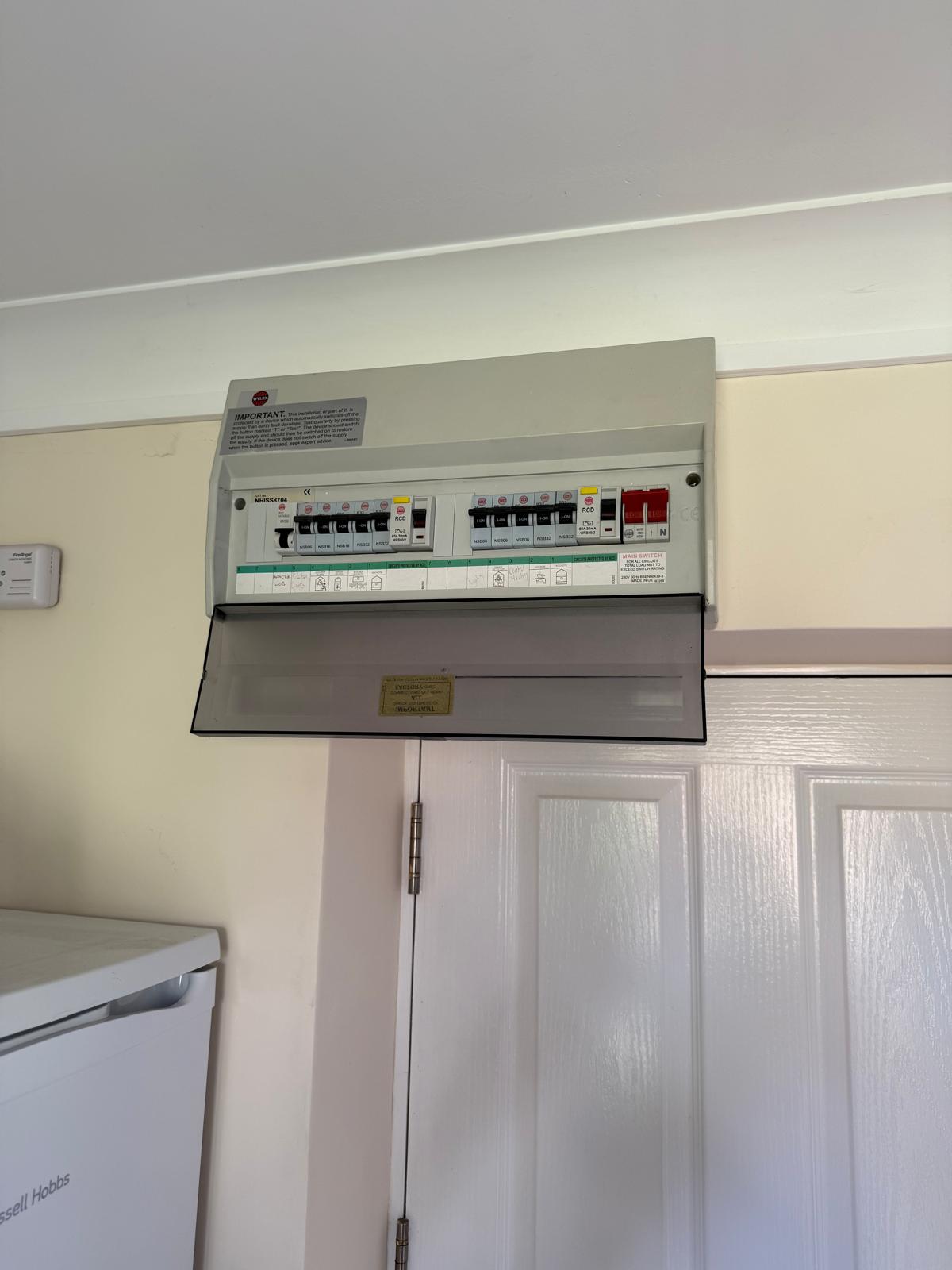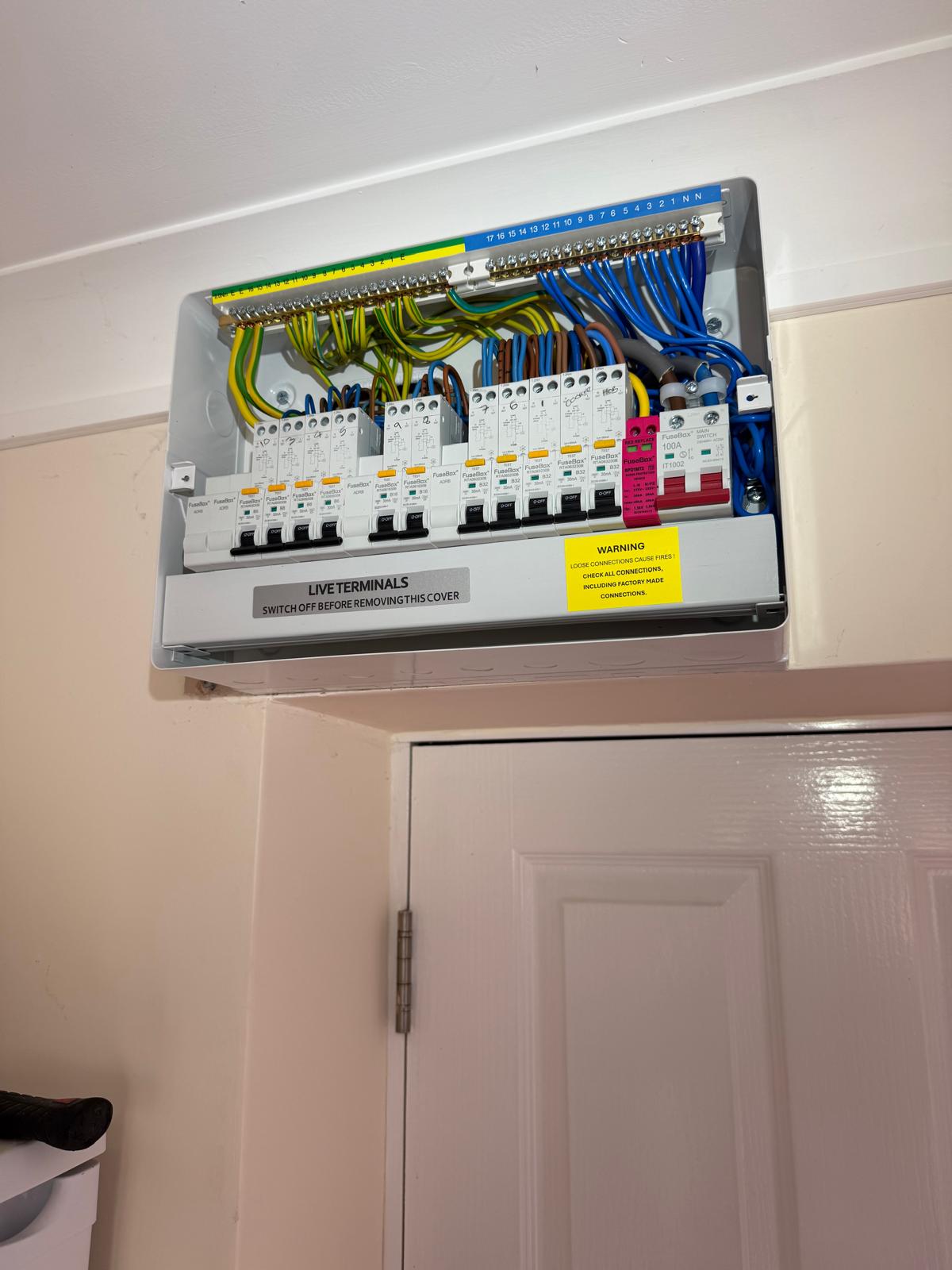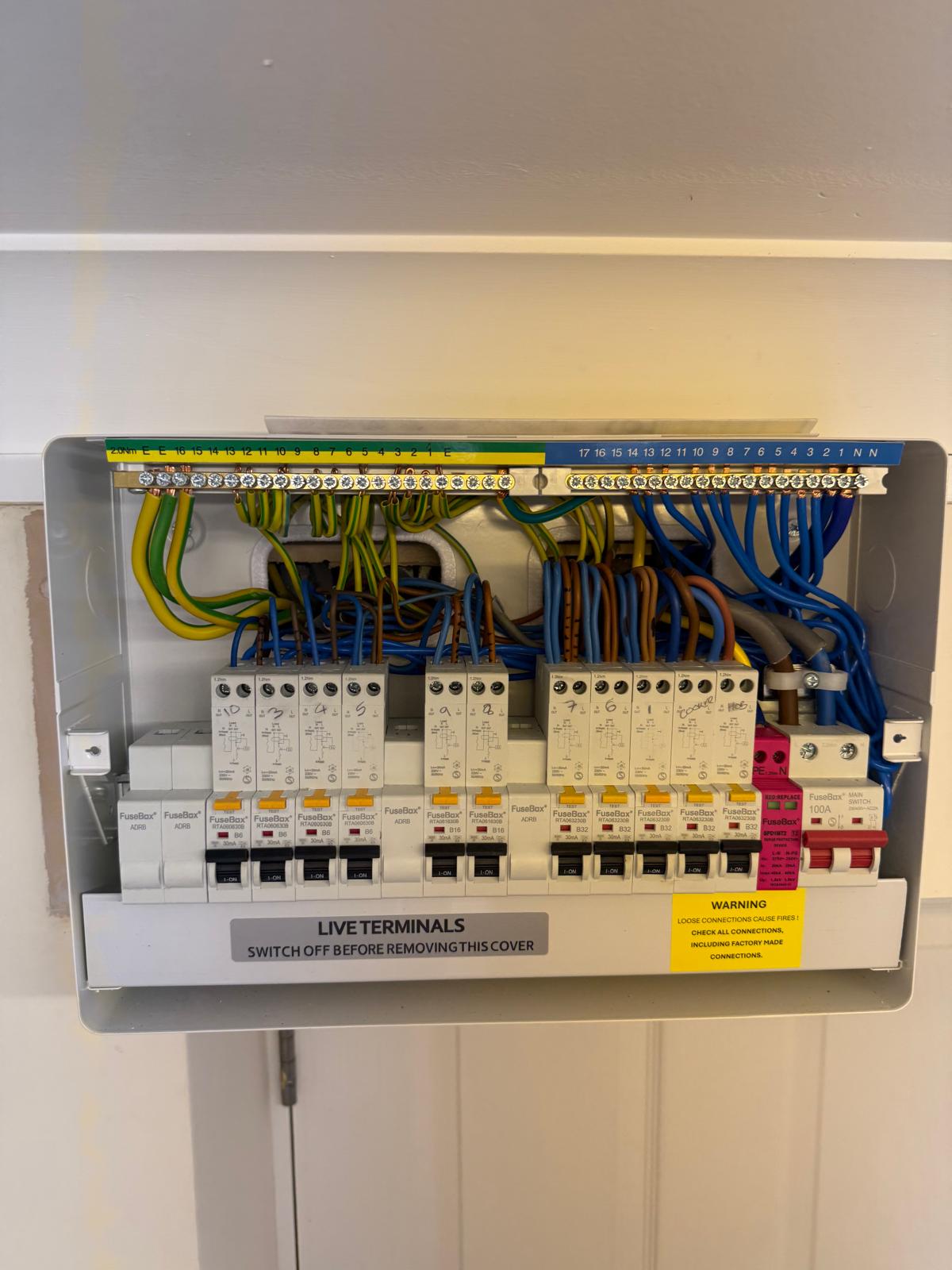
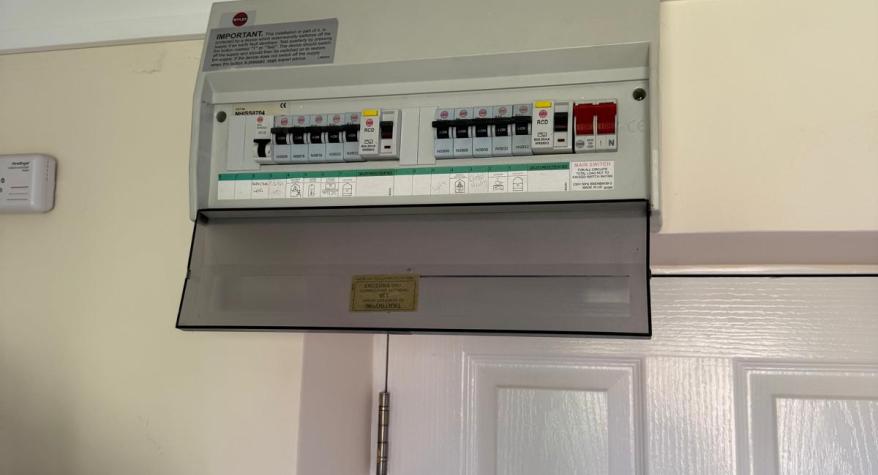
I recently completed a consumer unit replacement for a homeowner in Farcet, near Peterborough. The existing consumer unit had older protective devices and did not provide the same level of protection or separation that can be achieved with a modern consumer unit.
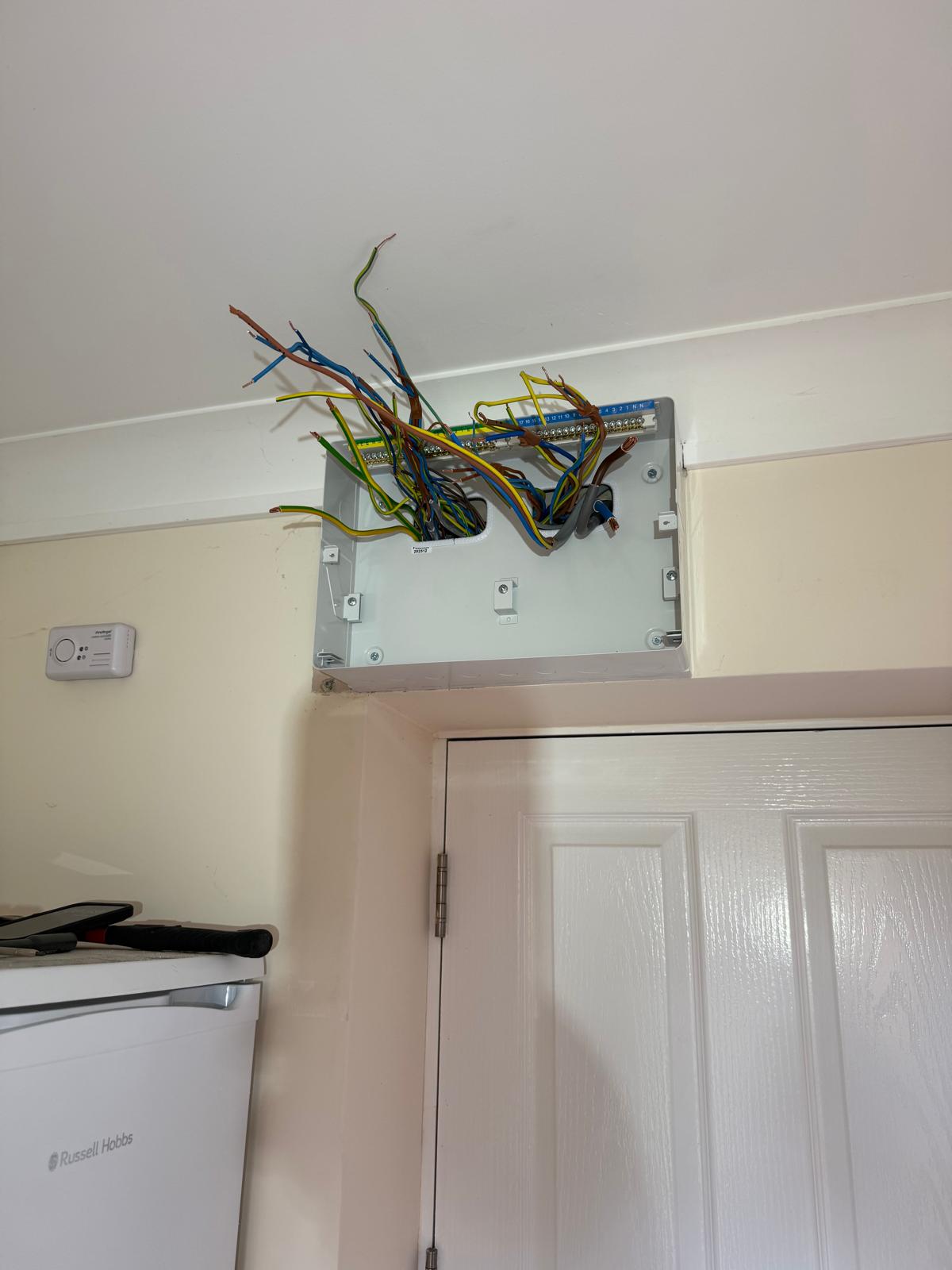
Before replacing a consumer unit, I inspect and test the existing electrical installation. This helps identify problems with the wiring, earthing, bonding or individual circuits before they are connected to the new board. Replacing a consumer unit should never simply involve removing the old one and connecting the new one without carrying out the appropriate checks.
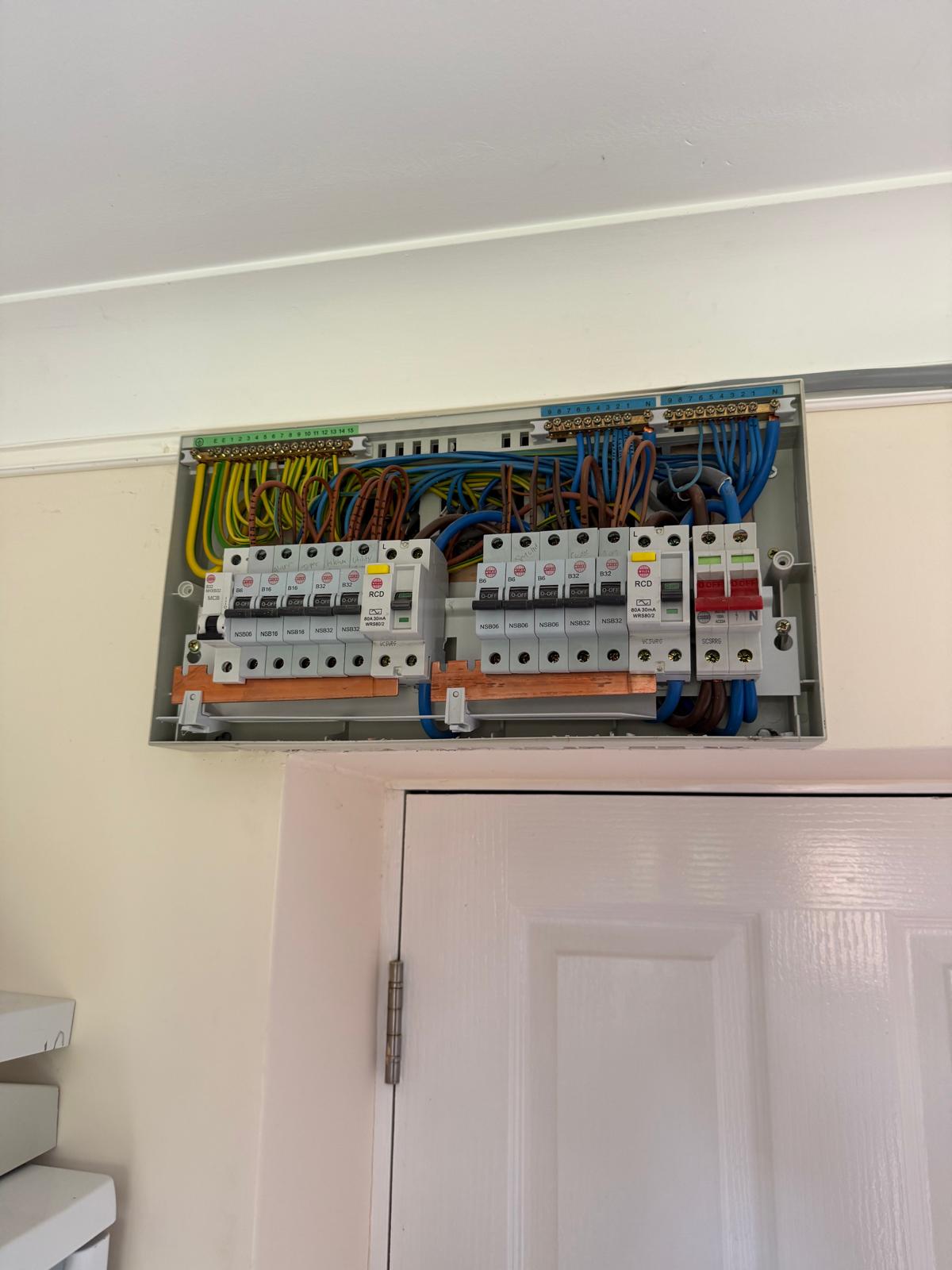
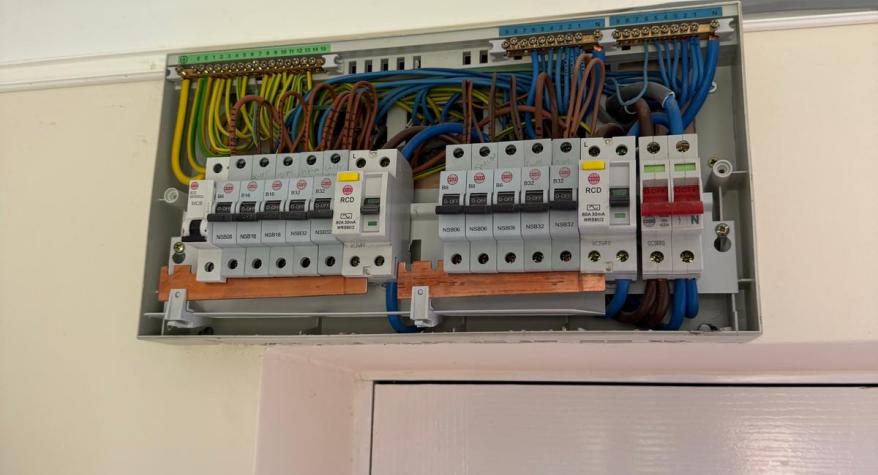
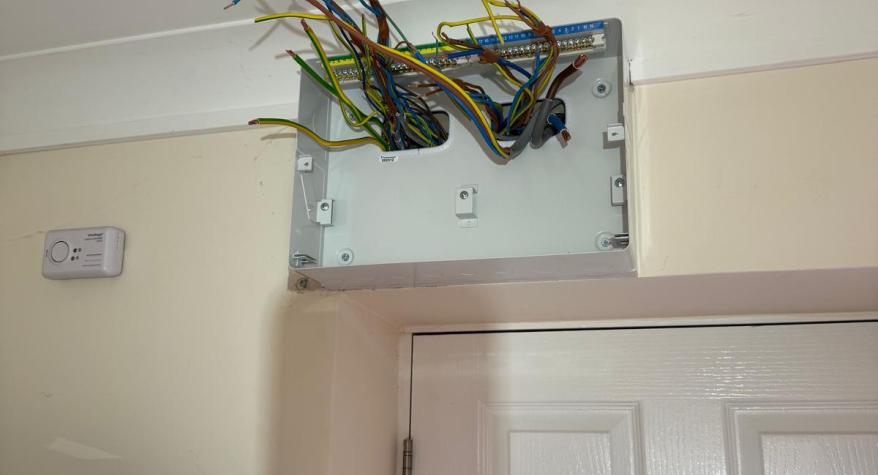
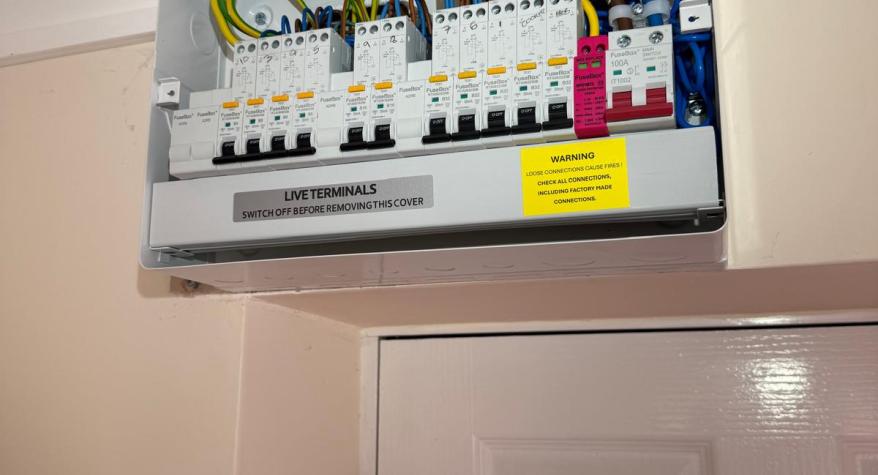
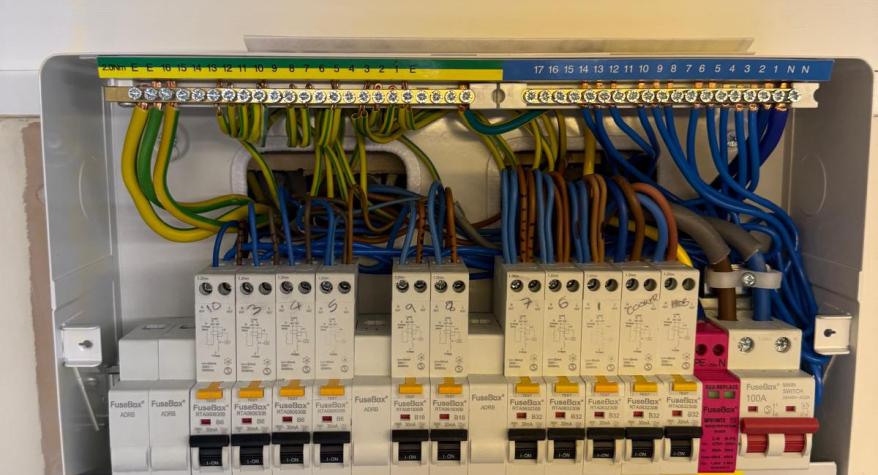
The before and after photographs from this job show the difference between the original consumer unit and the completed installation.
What does a consumer unit do?
The consumer unit, sometimes still called a fuse box, is an important part of the electrical installation. It distributes electricity around the property and contains the protective devices for circuits including sockets, lighting, cookers and outdoor supplies.
Older consumer units may use rewireable fuses, basic circuit breakers or shared RCD protection. An older board is not automatically dangerous simply because of its age. However, it may not provide the additional protection found in a properly designed modern consumer unit.
For this property in Farcet, I installed a compliant consumer unit with a non-combustible enclosure, individual Type A RCBO protection and a surge protection device.
Individual RCBO protection
An RCBO combines two forms of protection within one device. It protects the circuit against overloads and short circuits, while also providing residual current protection to help reduce the risk of electric shock.
Each circuit in this consumer unit has its own RCBO. This means that a fault on one circuit should only disconnect the affected circuit. For example, a problem with an outside light should not normally turn off several unrelated circuits around the house.
This is an improvement over some older split-load consumer units, where several circuits share one RCD. With a shared RCD, a single fault can leave a larger part of the property without power.
Individual RCBOs can also make future fault finding more straightforward because the affected circuit can usually be identified more easily.
Why use Type A RCBOs?
Modern homes contain an increasing number of electronic appliances. Washing machines, televisions, LED lighting, induction hobs, computers and phone chargers can all produce electrical characteristics that older Type AC RCDs were not designed to detect.
Type A RCBOs are designed to detect normal alternating residual currents as well as pulsating direct residual currents. This makes them a suitable choice for many typical circuits and appliances found in modern homes.
The correct protective device must always be selected for the circuit and equipment being supplied. Some specialist equipment, including certain electric vehicle chargers and variable-speed appliances, may require additional consideration.
Surge protection
The new consumer unit also includes a surge protection device, commonly known as an SPD.
An SPD helps protect the electrical installation and connected equipment from short-duration voltage surges. These surges may be caused by switching on the electricity network or by lightning activity nearby.
A surge protection device cannot prevent every possible form of damage and is not a substitute for a full lightning protection system. However, it can help reduce the risk of damage to sensitive equipment such as televisions, computers, heating controls, internet routers and modern kitchen appliances.
Testing and certification
Once the new consumer unit was installed, the circuits were inspected and tested to confirm that the protective devices operated correctly and that the results met the required safety standards.
Consumer unit replacements in homes are notifiable work under Part P of the Building Regulations. The homeowner should receive the appropriate electrical certification and Building Regulations notification following completion.
A consumer unit replacement can improve protection, make faults less disruptive and provide a clearer foundation for future electrical work.
Kerdon Electrical Ltd carries out consumer unit replacements, electrical inspections and domestic fault finding in Farcet, Yaxley, Peterborough and the surrounding villages. Please get in touch if you are concerned about an older consumer unit or would like advice about the electrical protection in your home.